

Built to Support Frequent and Heavy Vehicle Loads
Concrete driveway installation handles heavy traffic by using a strong base, the right concrete mix, proper thickness, and steel reinforcement. When installed the right way, a concrete driveway can support daily car use, delivery trucks, SUVs, and even larger vehicles without cracking or sinking. The key is good ground prep and smart design from the start.
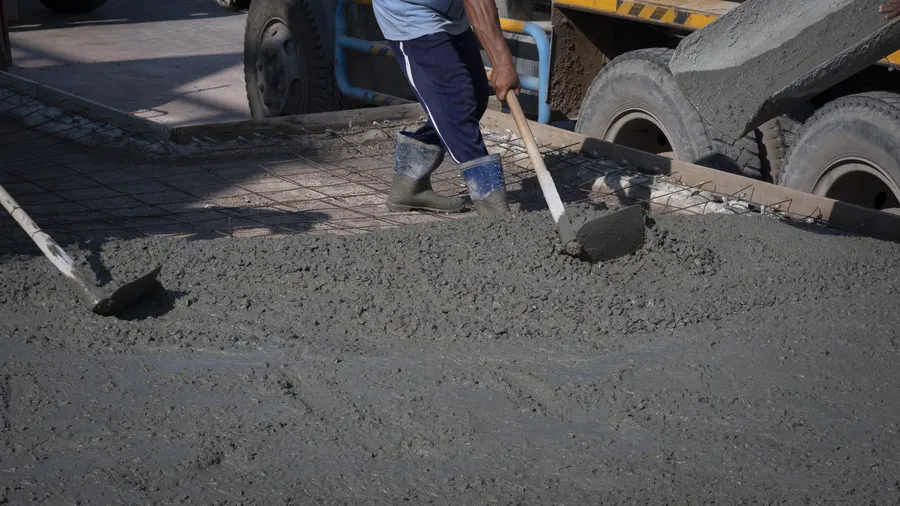
Quick Answer: Strength Comes From the Ground Up
Heavy traffic puts stress on any surface. Concrete works well because it spreads weight across a wide area. But the concrete alone is not what carries the load. The soil underneath, the gravel base, and the slab thickness all play a role. During concrete driveway installation, each layer is planned to help the driveway hold up under pressure.
If even one step is rushed, the driveway can fail early. When done right, it can last decades with normal use.
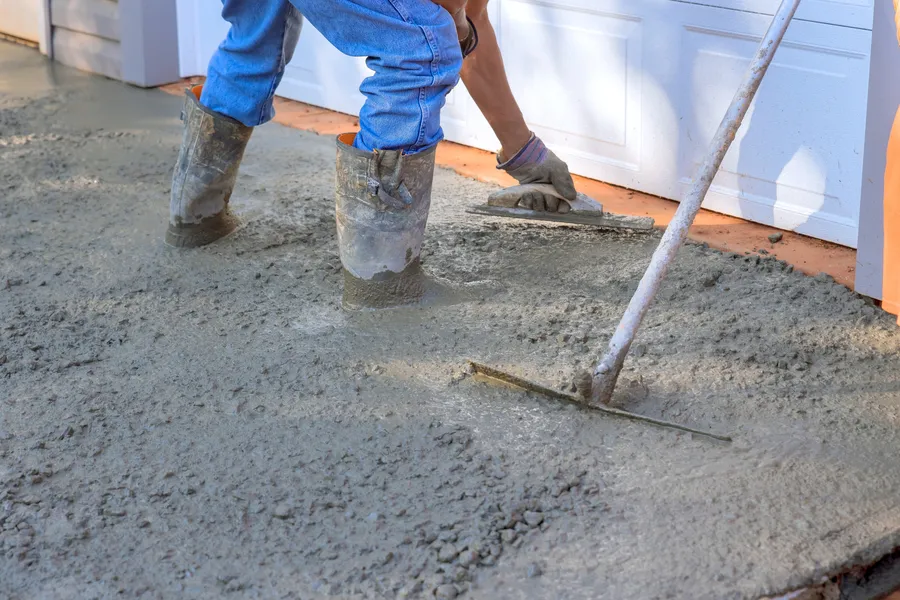
What You Need Before Starting
Before the first truck arrives, there are a few things that must be decided. These choices affect how well the driveway handles traffic over time.
- Soil test to check stability and drainage
- Plan for vehicle types, such as cars, RVs, or work trucks
- Correct slab thickness, usually 4 to 6 inches
- Quality gravel base, often 4 to 8 inches deep
- Steel rebar or wire mesh for added strength
If the driveway will support heavy service vehicles, the slab may need to be thicker than average. Skipping this step can lead to future cracks and sinking areas.
Step-by-Step: How the Process Supports Heavy Loads
Every step during concrete driveway installation affects how the driveway performs under weight. Here is how the process works.
- Excavation: Remove weak soil and organic material.
- Grading: Shape the ground for proper drainage.
- Base installation: Add and compact crushed stone or gravel.
- Form setup: Create solid edges for the slab.
- Reinforcement placement: Install rebar or wire mesh.
- Pouring concrete: Use the right mix for strength and durability.
- Finishing and curing: Smooth the surface and allow proper curing time.
The base and reinforcement are what help the slab resist cracks when heavy vehicles drive over it. Compaction is also very important. A loose base will shift over time. That movement causes breaks in the surface.
Proper curing matters too. Concrete needs time to harden fully. If vehicles drive on it too soon, the surface can weaken before it reaches full strength.
Common Mistakes to Avoid
Driveways that fail early often share the same problems. These issues usually happen when steps are skipped or rushed.
- Pouring concrete over soft or wet soil
- Using a slab that is too thin for the expected traffic
- Not adding steel reinforcement
- Poor drainage planning
- Driving on the surface before it has cured
Another mistake is ignoring slope. Water that sits on a driveway can weaken the surface over time. Good grading moves water away from the slab. That helps protect it year after year.
In the broader service category keyword world, durability always starts with preparation. No surface can handle heavy traffic without strong support underneath.
When to Call a Professional
Small patches and hairline cracks can sometimes be handled by a homeowner. Full driveway pours are different. They need heavy equipment, exact measurements, and timed coordination with concrete delivery trucks.
If your property sees large delivery trucks, trailers, or work vehicles, it is wise to get expert help. A professional team can calculate the load requirements and adjust the design. That may mean thicker concrete, stronger reinforcement, or a deeper base.
It is also smart to call a pro if your soil is sandy, clay-heavy, or prone to shifting. Ground issues often show up years later if they are not treated at the start.
Get a Driveway That Stands up to Daily Use
If you live in Thornton, CO and need a driveway that can handle steady traffic, reach out to Munoz Masonry LLC. We build driveways designed for strength and long-term use, and we take the time to prepare the base correctly before any concrete is poured. Call us at (720) 343-4732 to talk about your property and how we can help create a surface that holds up under real-world wear.